Pulse is a knowledge base for the Instagram age. It captures and broadcasts the projects and activities of the dynamic Mozilla Network.
Around the globe, teachers, engineers, policymakers, and others collaborate to protect and extend the internet as a public resource. They create amazing apps, art, tools, games, and campaigns. Their impact is tremendous, but decentralized and difficult to track, even within the network.
Pulse reveals the network's footprint, it fosters collaboration and amplifies the big wins. We are currently preparing a new release that includes profiles for the people behind all these great initiatives.
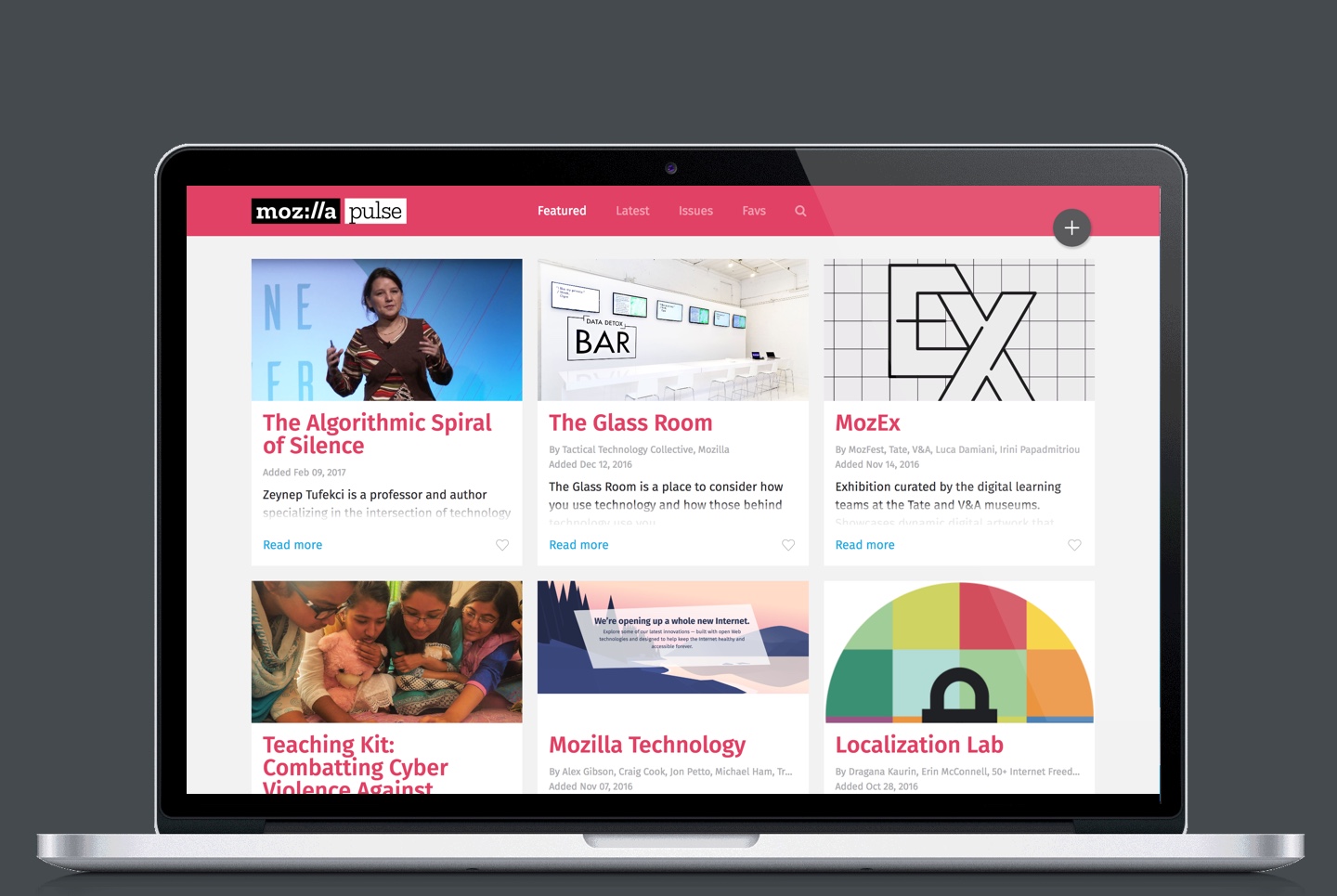
Pulse Featured
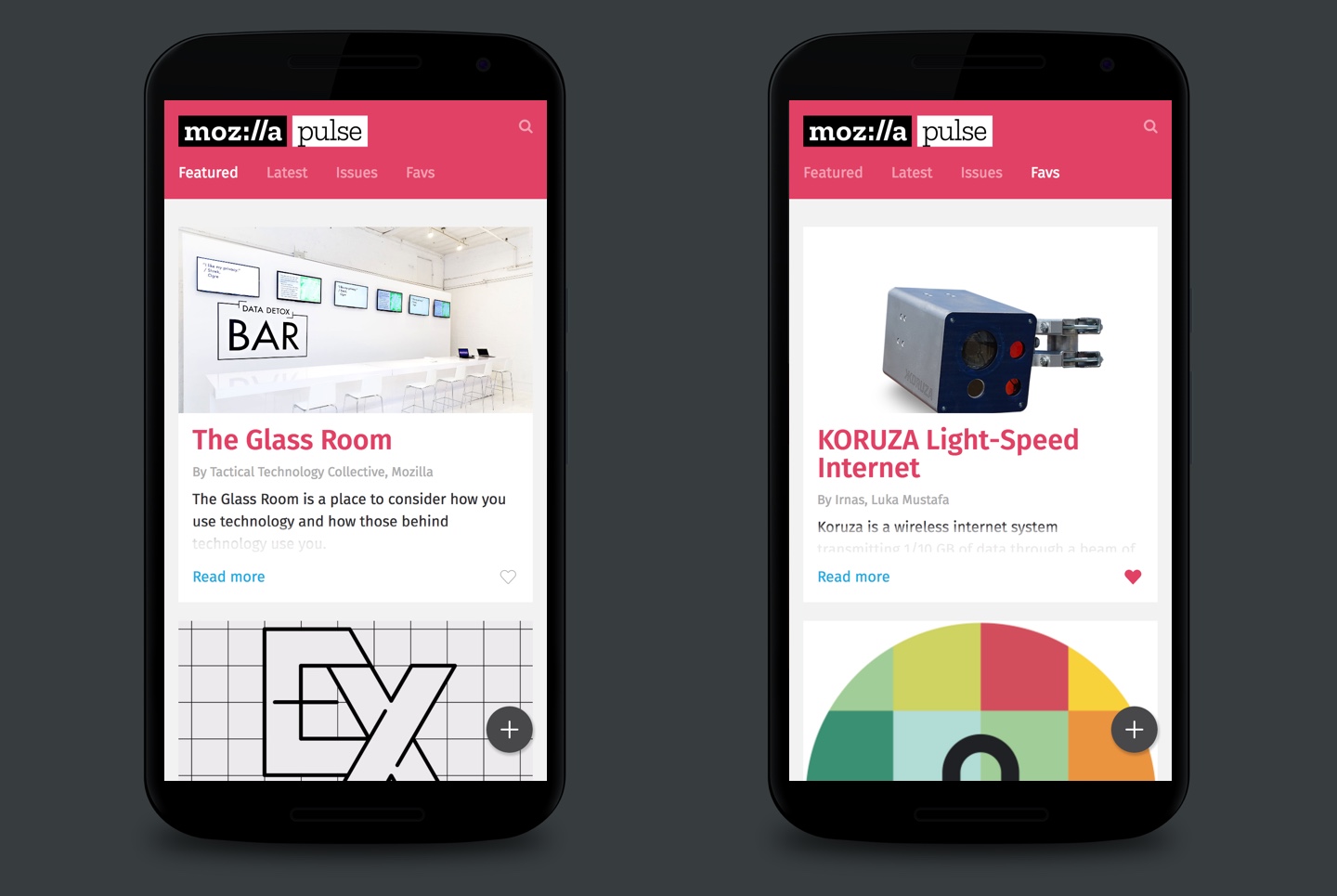
Browse featured and track your favs
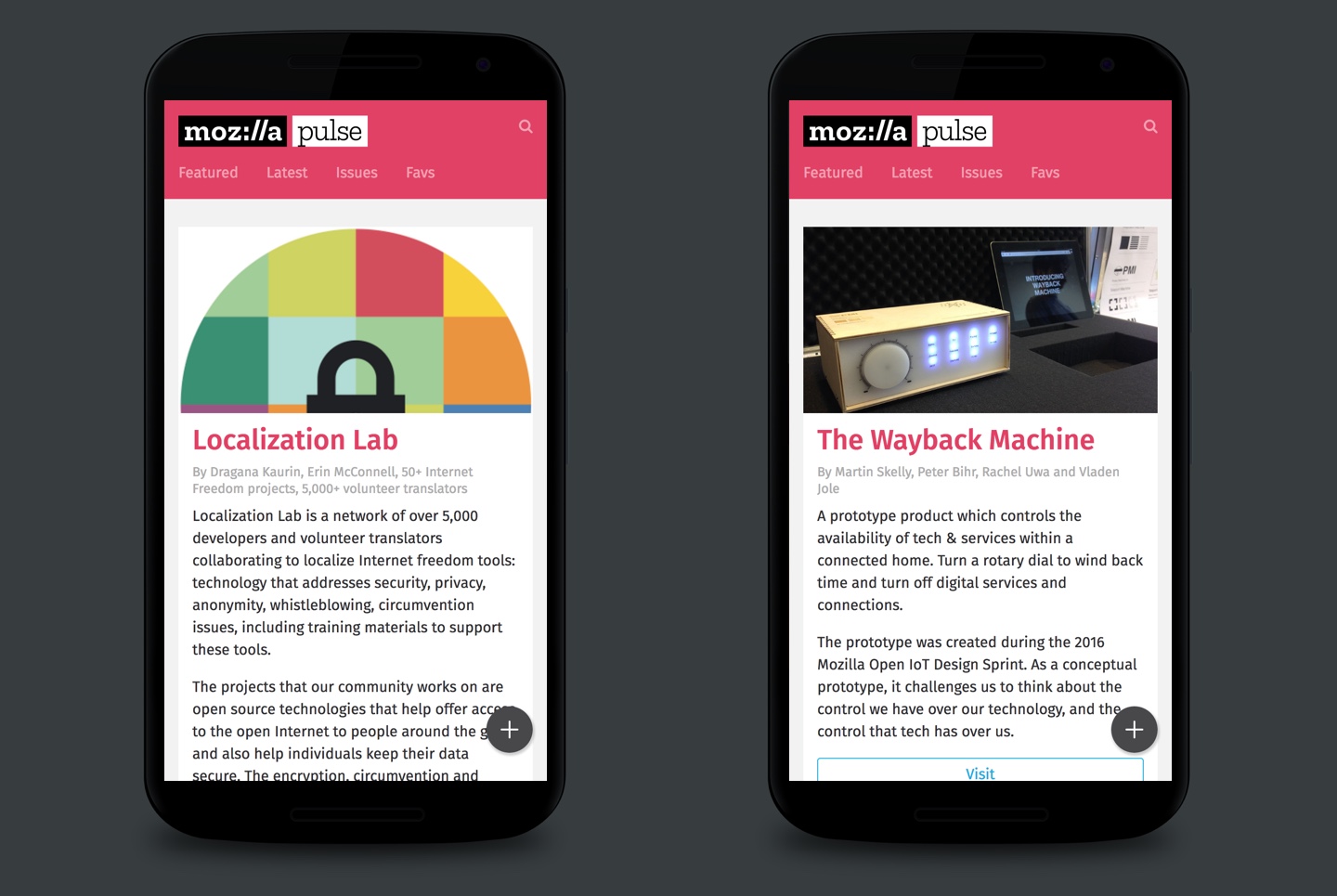
Projects with links to view & get involved
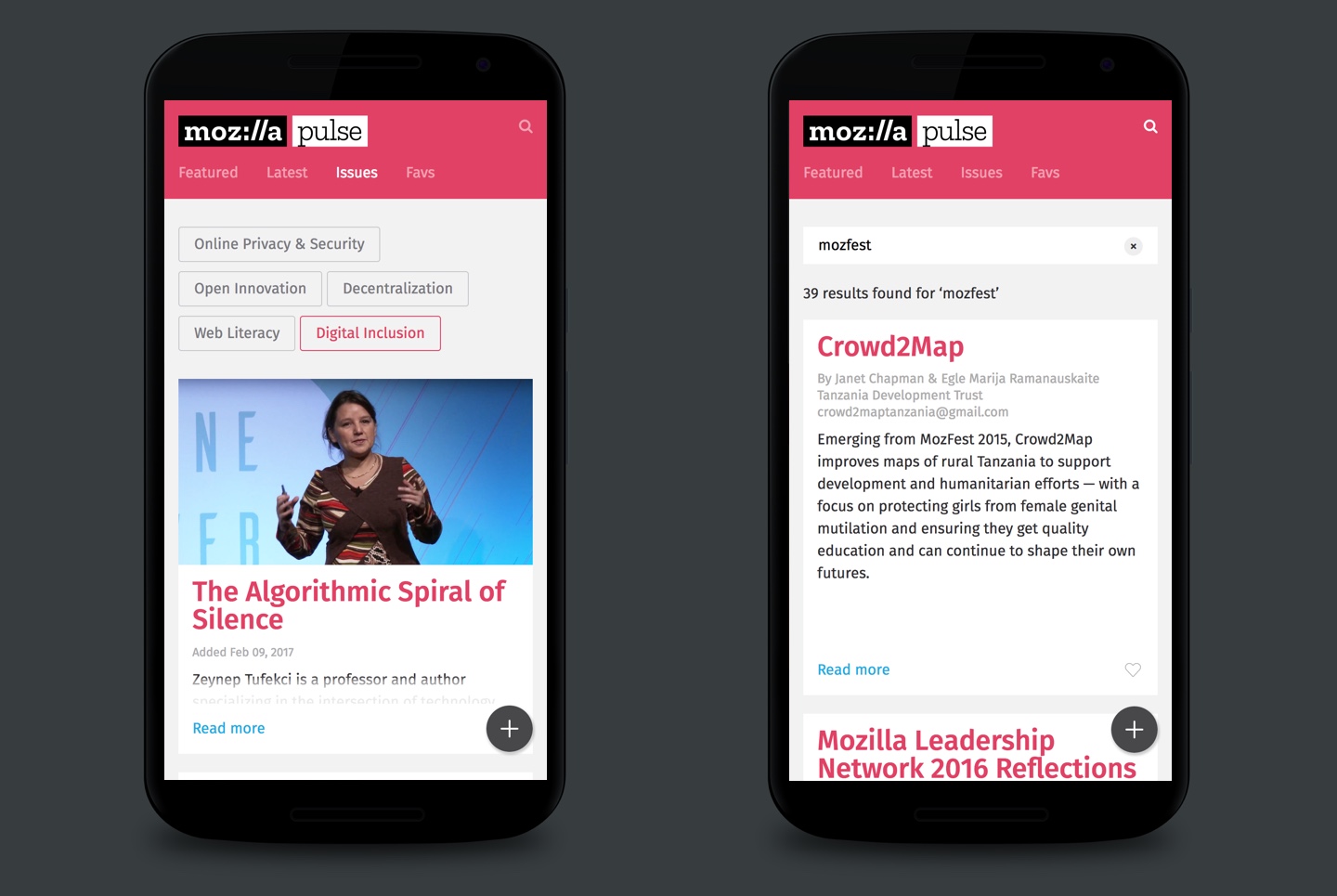
Browse by key issues. Search by topic or creator.
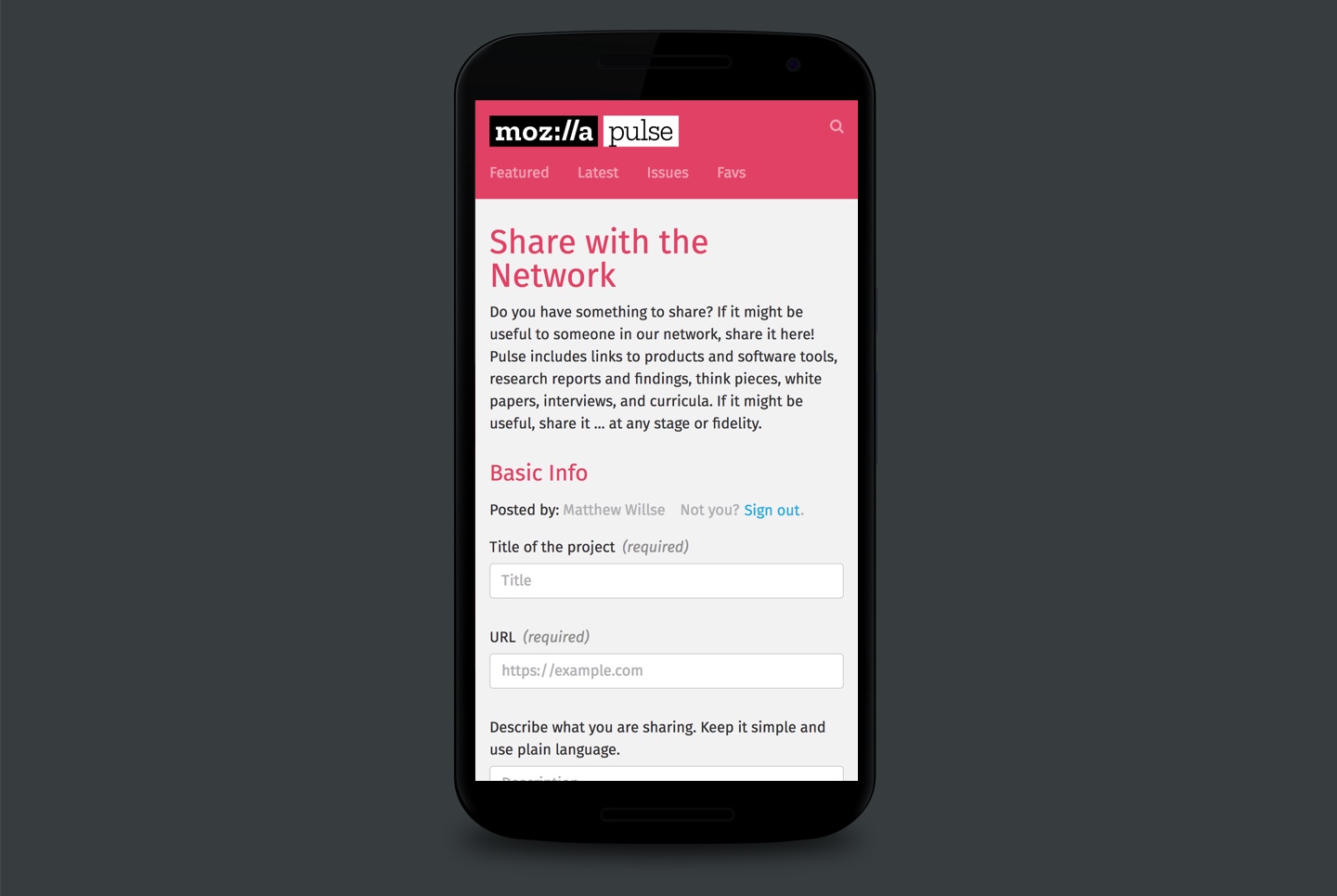
Add an entry
Research
The seed of this platform began with an exploration of mine: How could we better serve the network, increase their capacity, and amplify their impact? I rooted my research in conversations across Mozilla staff, fellows, and members of our network.
A few patterns emerged. People struggled to share their work in a coordinated fashion, to discover parallel efforts by others. They tried to accomplish this job with blogs, wikis, spreadsheets, and portfolios. It was labor intensive and disjointed, more noise than signal. As a result, they often duplicated each others work and missed opportunities to collaborate and share complementary expertise.
I found that people were eager for a better solution. And... while a shared platform could help the situation, it needed to satisfy a few requirements. The solution should:
- Primarily serve a highly engaged, high impact audience of thousands. Serve them well first; help them reach their audiences before we attempt to scale.
- Fit in people's existing work flows and minimize extra effort
- Provide clear short-term benefit alongside the long-term promise
- Flexibly include a range of artifacts, small and large, fledgling and complete
- Complement, not replace, other tools for collaboration
- Help people increase visibility, adoption, impact, funding and support of their endeavors
The Mozilla Network needed a means to capture all the great work, to broadcast potential connections. It needed a platform that could enable this decentralized, without expecting thousands of people to become librarians.
Prototypes
Two prototypes were critical to my success.
Early in my research phase, I built a prototype. The goal with this was to test the value of a shared space across domains. Even with limited content, we could see real examples of potential cross pollination. The prototype helped me ground my conversations with stakeholders and build valuable momentum. I intentionally kept the protoype rough to avoid any premature conclusions on the overall direction.
After we established requirements and a general design, I built a second prototype. The goal with this one was to test whether a single space could serve both as a stream of activity and an archive. I brought this prototype to the Mozilla Festival, to capture new projects generated at this high energy three day event. The platform also included prior grant-funded projects. The test affirmed several key assumptions, and again built more interest and momentum to the platform.
My prototype shared the main stage during closing demos. This brought visibility and pressure to succeed. I was successful, in part, because I insisted that the team resist complexity, favoring a quick build with duct tape, rather than a beta production quality version. This enabled us to work quickly, focus on content and simple features, and make the most of this opportunity for testing.
Launch
Following the success of the research and prototypes, we dug into a first release. We did a soft launch in April 2017, advertising only to Mozilla staff who are active with our partners in the network. The goal of this quiet launch was to monitor staff engagement closely, since they would be critical to any broader success. This also gave us a chance to build up content, before we connected with a broader audience.
Heading back to Mozilla Festival for a second year, we will test and push the platform to capture all the activity and extend the experience to the weeks and months that follow. We will also release a new profiles feature, increase people's capacity to connect and collaborate.
See the development of network-pulse and network-pulse-api on Github.
Visit
Simple to submit. Simple to search. Discover & collaborate on projects for a healthy internet: mozillapulse.org.